Inclusive Mainstream Fund (IMF) - what schools need to know, and what to do next

The Inclusive Mainstream Fund (IMF) is a major new government investment designed to help mainstream schools embed inclusion as part of everyday practice. For 2026–27, over £400 million per year is allocated to schools as part of a wider £500m programme.

This guide explains what the fund means in practice — and how school leaders can use it effectively to strengthen provision for pupils with SEND.

What is the Inclusive Mainstream Fund?

The IMF is a dedicated grant for mainstream schools (ages 5–16) to support a shift towards an education system that is inclusive by design.

The key aim is to:

  • Provide early support without needing diagnosis or EHCP processes
  • Reduce barriers through strong universal provision
  • Improve attainment, wellbeing and parental confidence

Importantly, this is not a stand-alone SEND budget — it complements:

  • Core school funding
  • The notional SEN budget
  • Existing SEND provision

How Speech & Language Link can support

The IMF prioritises:

  • Early identification
  • Scalable, evidence-informed interventions
  • Whole-school inclusive practice

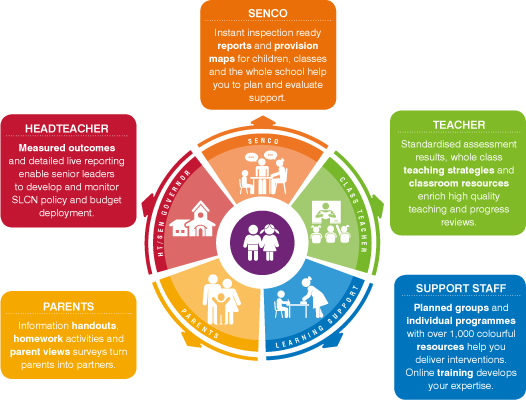
Speech & Language Link supports schools to:

  • Screen for SLCN across entire cohorts
  • Deliver targeted interventions without diagnosis
  • Equip teachers with practical classroom strategies

Generate data to inform inclusion strategies

Who receives the funding?

The grant applies to:

  • Maintained primary, secondary, middle and all-through schools
  • Academies and free schools
  • City technology colleges

How it is paid?

  • Local authorities receive funding for maintained schools
  • Academy trusts are paid directly
  • Payments are made in summer 2026 (June/July) as a single annual payment

How much funding will schools receive?

Funding is calculated using a formula aligned to the National Funding Formula (NFF):

1. A lump sum

  • £3,000 per school

2. Per-pupil funding

  • Primary: £16 per pupil
  • Secondary: £14 per pupil

3. Additional funding for low prior attainment (LPA)

  • Primary: £79 per eligible pupil
  • Secondary: £88 per eligible pupil

4. Area Cost Adjustment (ACA)

  • Adjusts funding based on local labour costs

Schools can estimate allocations using pupil numbers and LPA data ahead of confirmed figures.

What must the funding be used for?

The IMF is explicitly designed to help schools:

“embed evidence-informed inclusive practice” and remove predictable barriers to learning

Core priorities include:

  • High-quality adaptive teaching
  • Inclusive curriculum design
  • Calm, safe and accessible environments
  • Early and targeted intervention support

This aligns strongly with whole-school approaches to speech, language and communication needs (SLCN), SEMH and cognition and learning.

The 7 Key Areas of Investment

DfE recommends schools structure spending across 7 themes:

1. Leadership and governance

  • Embedding inclusion into strategic planning
  • Using data and evidence to drive decisions

2. Early intervention

  • Ensuring timely support without waiting for diagnosis

3. High-quality teaching for all

  • Staff training and effective deployment
  • Differentiated and inclusive teaching strategies

4. Provision beyond the classroom

  • Supporting independence, wellbeing and life skills

5. Culture, belonging and attendance

  • Inclusive behaviour systems
  • Improving attendance through supportive practice

6. Partnerships with families and services

  • Strengthening home–school collaboration
  • Supporting transitions

7. Inclusive environments

  • Reducing sensory and cognitive barriers
  • Designing classrooms that support regulation and learning

A major new requirement: Inclusion Strategies

All schools must:

Publish an Inclusion Strategy by 31 December 2026

This must:

  • Be available on the school website
  • Be accessible to parents and Ofsted
  • Be reviewed by governors/trustees

It must set out:

  • Key needs and barriers within the school cohort
  • How funding is currently used
  • Plans for future evidence-based inclusive practice
  • How the school aligns with the 7 areas of inclusion

This is likely to become a core accountability document for SEND provision.

What this means for SEND leaders

The IMF represents a shift in emphasis:

From   To
Reactive support   Early identification & intervention
Individual diagnosis-led provision   Whole-cohort inclusive design
Separate SEND strategies   Integrated whole-school inclusion strategy


For SENCos and leaders, this means:

  • Greater influence on whole-school practice
  • Stronger focus on universal provision quality
  • Increased expectation to show impact and evidence

Practical next steps for schools

1. Review your current offer

  • Audit universal provision (especially for SLCN)
  • Identify predictable needs across cohorts

2. Align with the 7 themes

  • Map current interventions and provision
  • Identify gaps in:
    • Early identification
    • Staff training
    • classroom environments

3. Strengthen speech, language and communication support

  • Prioritise tools that:
    • Identify needs early
    • Support classroom strategies
    • Provide scalable interventions

4. Begin drafting your Inclusion Strategy now

  • Use existing SEND, behaviour and curriculum plans
  • Ensure alignment with IMF expectations

5. Plan for evidence and impact

  • Prepare to demonstrate:
    • Improved access to learning
    • Reduced barriers
    • Better outcomes for pupils

How Speech & Language Link can support

The IMF prioritises:

  • Early identification
  • Scalable, evidence-informed interventions
  • Whole-school inclusive practice

Speech & Language Link supports schools to:

  • Screen for SLCN across entire cohorts
  • Deliver targeted interventions without diagnosis
  • Equip teachers with practical classroom strategies
  • Generate data to inform inclusion strategies

Key takeaway

The Inclusive Mainstream Fund is more than funding — it is a system-wide shift towards inclusion as standard practice.

Schools that succeed will be those that:

  • Invest in universal provision first
  • Use data to anticipate need
  • Build staff capability across the workforce

Next steps

We’d love to share with you how our assessments, evidence-led interventions and training could be made available to your school to help you support SLCN and align with Inclusive Mainstream Fund requirements. Speak to our helpdesk to learn more or book a free, no obligation trial.

Email us at: helpdesk@speechlink.co.uk

Phone us on:0333 577 0784

Contact form